Grieving in peri-menopause
Located in County Sligo along the Wild Atlantic Way, Carrowmore is one of the most significant prehistoric landscapes in Europe. It is the largest and oldest collection of Neolithic tombs in Ireland, with over 30 surviving monuments dating back almost 6,000 years and has been placed on Ireland’s Tentative List for UNESCO World Heritage status.
I tried to visit last year, to tick it off the bucket list but it was closed and so Ireland brings us back again. I always feel that land calls to us when we need it the most.
Carrowmore is an incredible place, surrounded by hills and mountains, with a lovely sense of peace. I crawled my way into the main chamber, the listoghill, and sat quietly in between the interruptions by the boys, who at one point sat and chanted, all in good humour of course! The energy was intense.
Carrowkeel
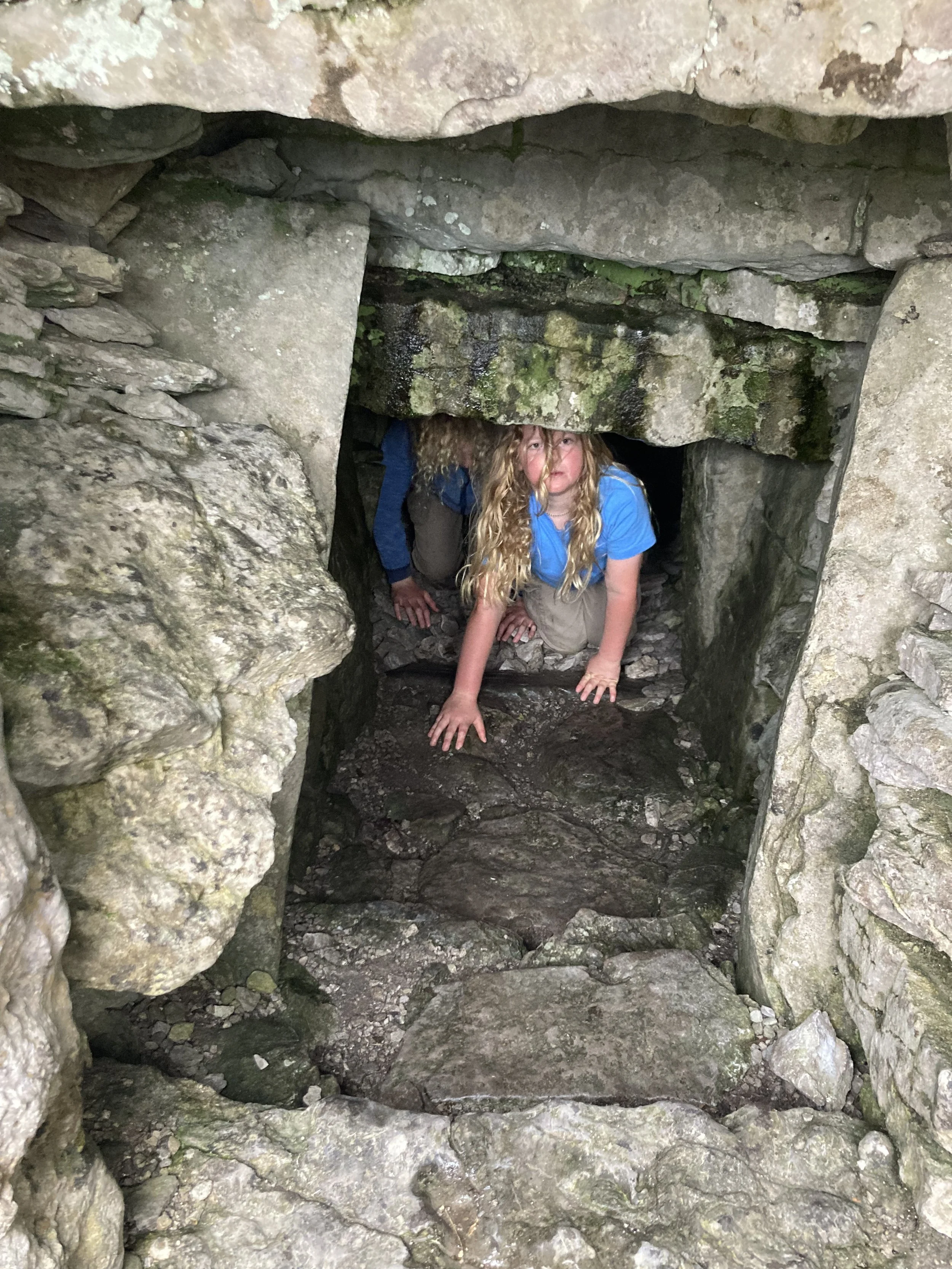
I couldn't resist taking us back to Carrowkeel too, a spectacular Neolithic hilltop passage tomb cemetery located in the Bricklieve Mountains of County Sligo, and dating back to the 4th millennium BC (circa 3200–2400 BC), it is considered one of Ireland's four major passage tomb complexes, older than the famous Newgrange. We nestled into Cairns G and K, featuring unique corbelled roofs and "window" slots that align with lunar and solar events; we had them all to ourselves, felt privileged.
In one of these cairns I was reminded, that we are all finding our way to the light. It is a not a case of seeking something outside ourselves, but of removing and letting go of everything which gets in the way of that light shining brightly out into the world.
I am also increasingly conscious of the depths of the process of grief, not least grieving the loss of those we love, but of grieving parts of ourselves that we need to let go of, that we have no control about - for us women the perimenopause is such a process, the transition to enchantress and on into crone, a deep letting go of all that has been, of the possibility of motherhood, of bringing new life into this world from our womb - they call it a SHero journey this transition we make.
Croagh Patrick
I’ve been using my menstrual cycle as a spiritual practice to greater consciousness and as my cycle shifts, my anchoring is gone. There is grief. My connection with the moon is no longer reflected in my monthly bleed, finding a different rhythm, which will one day cause no blood to be released.
It’s a discombobulating time in a woman’s life, confusing.
Menstruation brings a wintery feel, gifting insight, and a deep release. When the bleeding stops spring creeps in, bringing renewed hope, ideas and possibilities. Ovulation is the summer of the cycle, the full moon, when we feel alive, contented and happier in our own skin - the all-singing and dancing time when we feel our best. The premenstrual weeks make us permeable, vulnerable and delicate and yet reveal our deeper feelings and truths, and as uncomfortable as that can be, it's followed by the physical and energetic release of menstruation.
The menstrual cycle gives us an inner rhythm, bringing us ever closer to our true self.
A gift at Srahwee Wedge Tomb
And now as we - those of us - navigate perimenopause, there can be a sense of sadness and loss that can't be pinned down, but here we are, naked and home once more and facing ourselves.
It’s a watershed moment, a time to ditch the dead end jobs and relationships, the toxic friendships, the ways of being and relating that no longer serves us; to let go of caring what others think of us and live our life for us.
Our life is our own. Our future is what we make it. We have choice - but what choices do we make, what actions do we take, from love or from fear?
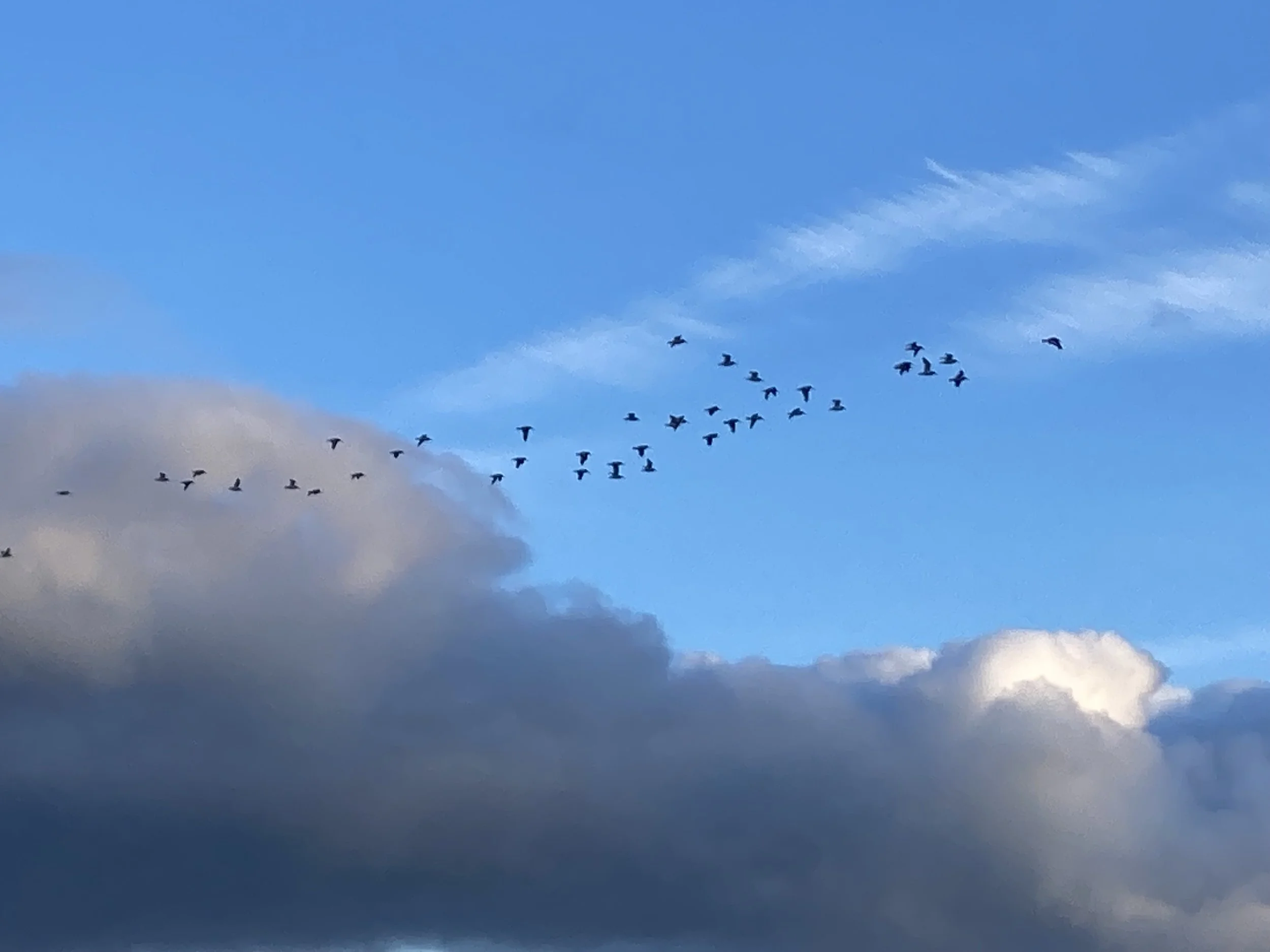
Carrowmore Lacken
It’s a time to be deeply honest with ourselves. What kind of life do we want for ourselves now? Time is running out. We will die. And we don’t always know when that time might come. I learned this lesson with the passing of two dear friends, before they’d had a chance to navigate peri-menopause and despite the grief, the shift, I’m grateful to live long enough to experience it.
However, for many, who have experienced pain with their cycle, like with endometriosis, adenomyosis or PMDD, the end of the menstrual phase of life can seem like a blessed relief.
Indeed, once the sensitivity of perimenopause is done, freedom awaits; the hormonal balance returns to something similar to that before puberty - my Ayurvedic doctor always says that she doesn’t understand why women wouldn't celebrate this, no longer hijacked by their emotions, experiencing much greater stability instead. And yet there's still the grief of so much time lost to pain, and years of looking for a diagnosis.
It doesn’t help that biological fertility is often singled out as a defining characteristic of femininity, making this transition harder yet. For those who have been unable to conceive, whether by choice or otherwise, there is much grieving, even when it had all felt resolved years previously - and acceptance that the life we imagined for ourselves has not come to be, broken dreams, they cause havoc to our heart; please be gentle.
Even for those of us fortunate to conceive, with children, grief can arise from the sense of time passing and what might have been; we too share broken dreams, relationship break downs, the pain we have caused ourselves by not always honouring our truth, recognising our worth and loving ourselves, of making choices through fear rather than from the heart.
We live in a grief-averse society, where grieving the loss of loved ones has to take place privately, and so there is little time or permission to allow these feelings that the peri-menopause brings. Many will raise their eyebrows - you might be doing the same - commenting that this is simply a natural transition and to get on with life, women have coped for a millennia, why make a big deal now.
But it is a big deal this transition and I have seen it affect many of my clients in a variety of different ways.
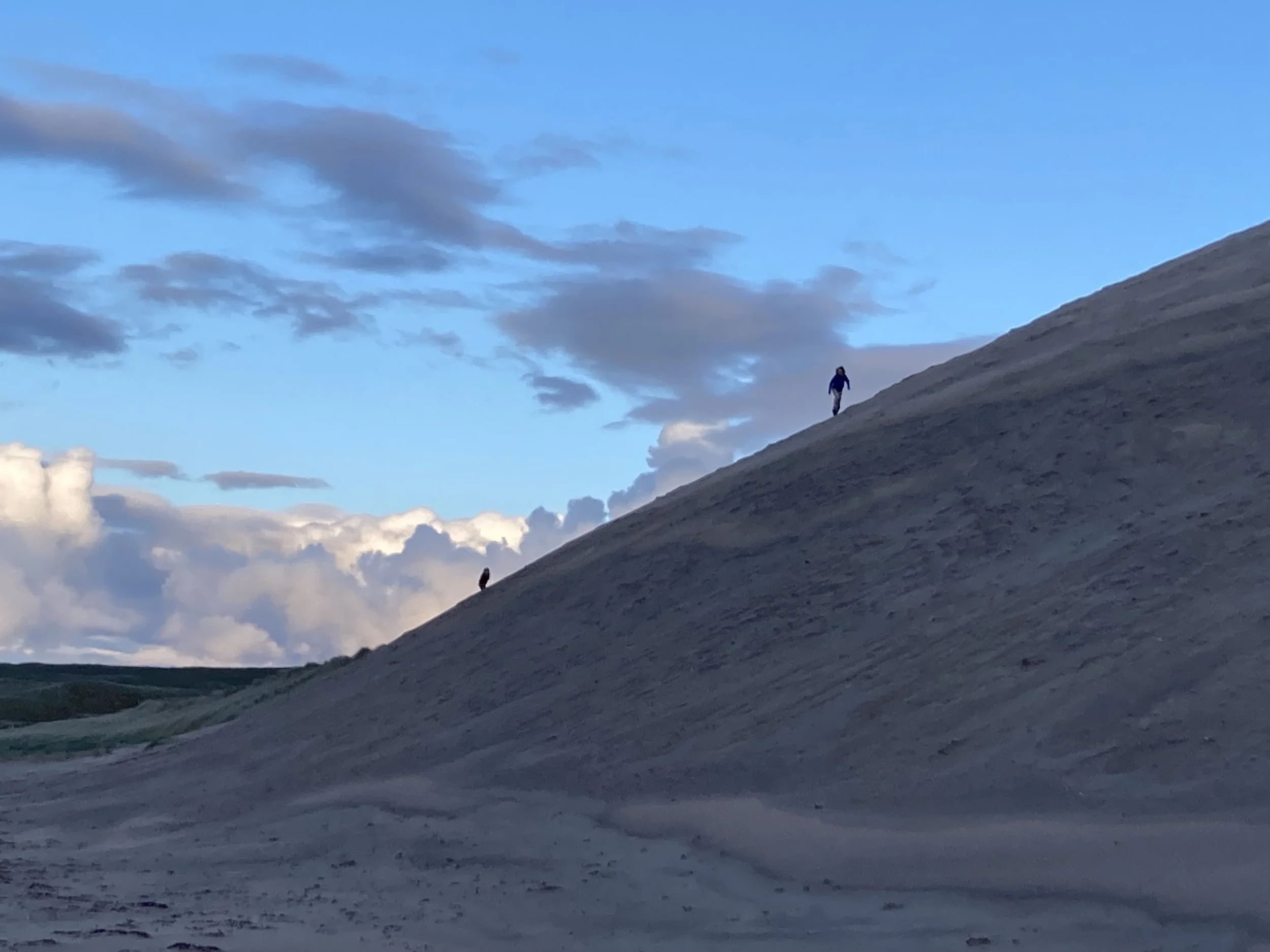
Sand dunes
Many women struggle for many reasons, not least the loss of who they were, of their fertile days, but of the aging that this transition signifies, within an agist society, and the pain of realising that one’s worth has to come from somewhere else than how we are perceived on the outside.
Our body is subject to decay. This is nature’s way. We cannot fight aging, despite the many creams, potions, pharmaceutical drugs and practices that tell us we can, that play for time, that stall our transition, this most powerful time in many ways in a woman’s life.
It saddens me that birth and menopause have been medicalised and take place under hushed tones, hidden away in clinical environments, prescriptions given as if this might lessen the burden.
but it’s not a burden necessarily, instead, perhaps a gift, for perimenopause is a watershed moment, an opportunity to delve deeper into the wounds we still carry, in the false beliefs we hold, the lack of confidence and love for self, the self-sabotaging patterns, the lack of recognition of our worth. It’s a time to reclaim ourselves, to break free, to go “no more”, and take full responsibility for this one precious life.
As Mary Oliver fabulously wrote in the Journey:
“…and there was a new voice
which you slowly
recognized as your own,
that kept you company
as you strode deeper and deeper
into the world,
determined to do
the only thing you could do—
determined to save
the only life you could save.”
It is a time to recognise that we have choice. But to realise that, we have to go deeper inside ourselves, to the light that shines brightly, trying to illuminate our way, to let go of how we think it should be, to allow the heart to guide us instead.
A heavy heart longs to share its story and perhaps its time to find a 'safe space to talk through feelings coming up, or to journal, to allow the grief to flow.
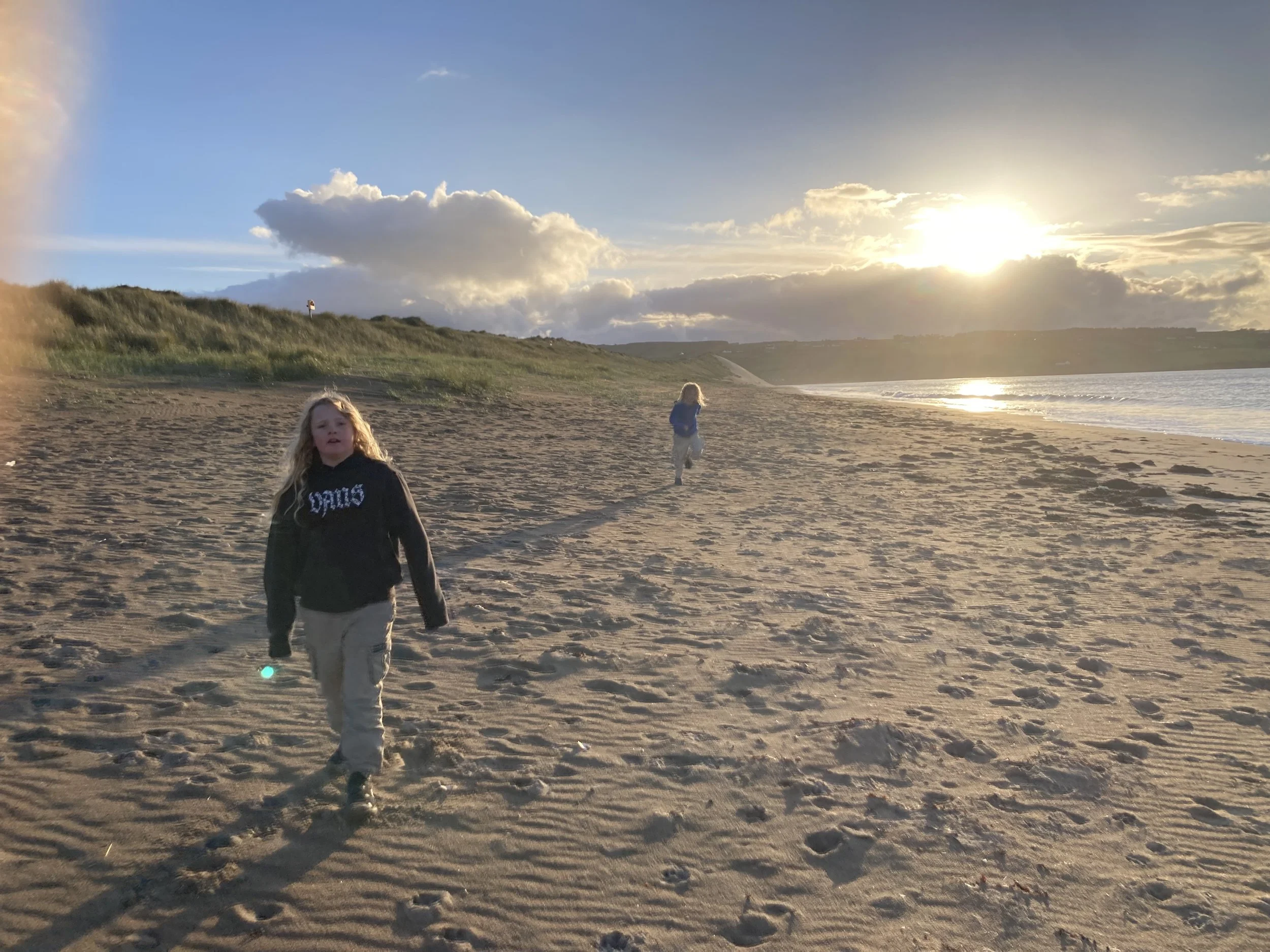
Carrowmore Lacken
I’m finding my way, almost finished writing a lot of words about grief and appreciating that I don’t know what might come next, or trying to find peace in the unknown, of nestling deeper into myself through yoga practice, shadow work and meditation and by being immersed in Gaia, who holds me in love.
I am conscious that we have a finite time here on this beautiful planet and I am done with perpetuating old stories and ways of being that don’t allow more of my light to shine brightly into the world.
I am letting go now, unburdening myself of the past - making peace with part of me that has carried her woundings and trauma and stories, unburdening myself of all of this, to begin again, a new journey, a new way to be.
I no longer want fear getting in the way and clouding my thinking, no longer wanting to be highjacked by my emotions either. It is time now to open the heart wider instead, a deeper coming home to myself.
The moon will always be my anchor and Gaia too. I’m grateful to the stones for the insight they revealed and for calling me and holding me in love - loved I am, and you are too.
With love from Ireland
Emma x
Many women never get this chance, and perhaps for them there can be a deeper grief, than those of us who were fortunate to conceive. It can be a tough ride regardless, a whole way of being, cyclical, from wax to wane and all over again, and can lead to depression, anxiety and feelings of discombobulation.
For me, it’s a deep grief for a practice that I have embraced for many years now of working with my menstrual cycle as a path to greater consciousness, of using it as a guide to help me understand where I am out of balance in my life. This cycle is changing, lengthening, no longer aligned to the moon, and this is painful in many ways, because of the loss of something that has anchored me and played such a pivotal role in the way I live and relate to myself and my body and the cosmic forces.
I am conscious that always with endings there are new beginnings.
But the endings can be tough. Not least the letting go they encourage, enforce, require, but the fact that we have no idea where we are headed instead - the unknown.
And yet within that, a perspective shift, can reveal the excitement of the potential and possibility as yet untapped.
I
This time before the final period can be complex and filled with grief.
Ritual
The power of ritual cannot be overstated. You might find a one-off ritual satisfying or you can repeat the process with each new or full moon, or with the arrival of your period. You get to choose your own formula which might include:
An object that represents your feelings
Offering gratitude for what you've received
Expression by writing, drawing, a song or movement
Release by blowing out the candle, burning the journal page, closing the door.
Nature
Take inspiration from the wisdom of the natural world. Autumn with the bittersweet loss of the light as the leaves fall, is the perfect time to learn everything we need to know about grief. Go outside and observe the trees, if you're a hugger, lean in: ask the trees for their wisdom. It's the chlorophyll retreating that reveals the leaves' true colours, the gorgeous oranges and golds were there all the time, hidden by the green.
Period timeline
You will likely have around 450 menstrual cycles through your life, and this needs to be recognised and validated to enable the move into postmenopausal life. Making a period timeline will help to process your feelings as you reflect on the longer passage of time and experience. To make a period timeline:
Draw a long line and at one end mark your first period.
At the other end, mark your last or most recent period.
Mark the line into decades and years.
For each year, write down the number of menstrual cycles you had.
Place significant menstrual events along the timeline, for example pregnancies, miscarriages, onset and departure of conditions/illnesses.
Give time to reflect and perhaps talk through your timeline in a safe space.
Finding a new anchor
The menopause moment, a year of no periods, marks the shift from biological to creative fertility, but how can we find rhythm and anchor ourselves here without a menstrual cycle? The answer is shining above us. By tracking feelings and energy with the moon, we can lean into a sustainable life and pace our rhythm of rest and activity. We owe this not only to ourselves, but also to our communities to be able to share the unique expression of our skills and gifts abundantly in the second half of our lives.